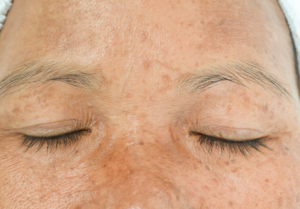
Sun damage refers to the harmful effects that ultraviolet (UV) radiation from the sun has on the skin, eyes, and overall health. It can result in both short-term and long-term consequences, some of which can be serious.
FAQs
What are the types of Sun Damage?
Photoaging: Premature aging of the skin, leading to:
Wrinkles
Fine lines
Hyperpigmentation (age spots or “liver spots”)
Loss of skin elasticity
Actinic Keratosis: Rough, scaly patches that can be precancerous.
Skin Cancer:
Basal cell carcinoma (BCC)
Squamous cell carcinoma (SCC)
Melanoma (most dangerous)
What are the Symptoms of Sun Damage?
Persistent redness
Rough or leathery skin texture
Uneven pigmentation
Freckles or moles that change in size, color, or shape
Fragile or bruised skin
How to Prevent Sun Damage? Tips
Use broad-spectrum sunscreen (SPF 30 or higher) daily, even on cloudy days.
Wear protective clothing, hats, and sunglasses.
Seek shade between 10 a.m. and 4 p.m. when UV rays are strongest.
Avoid tanning beds.
Reapply sunscreen every 2 hours, especially after swimming or sweating.
What are the Treatment Options?
Topical treatments: Retinoids, antioxidants (like vitamin C), and bleaching agents.