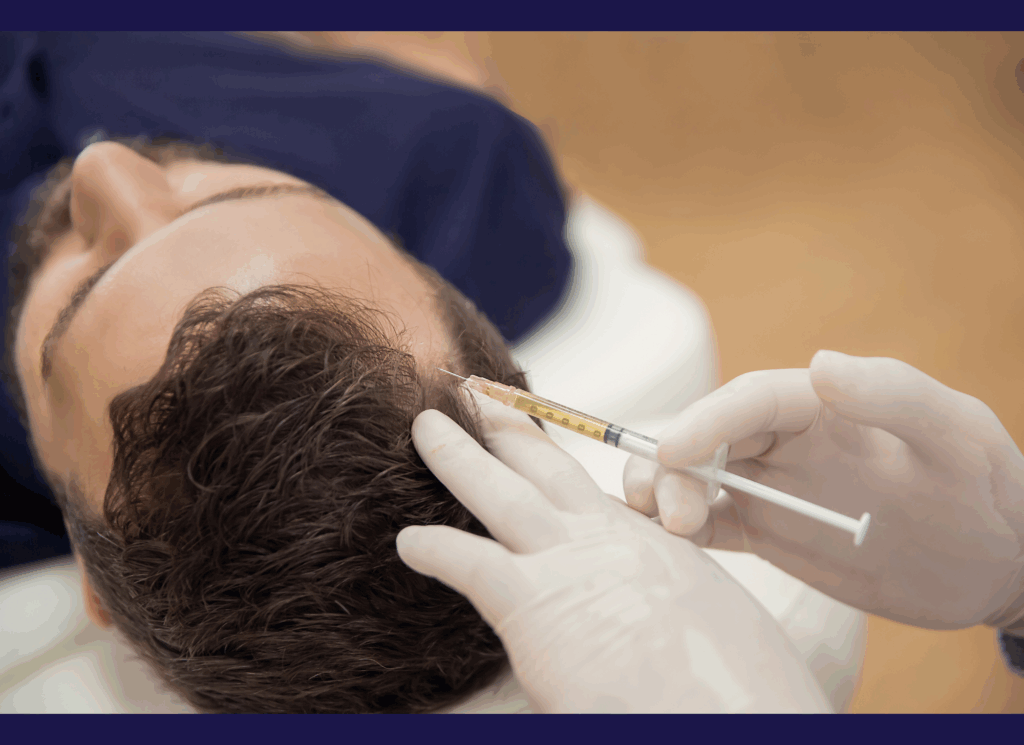
Hair restoration using medications, PRP (Platelet-Rich Plasma), and exosomes is a multifaceted approach that can be tailored depending on the cause and severity of hair loss. Here’s a breakdown of each component:
Medications
Minoxidil (Rogaine)
Mechanism: Increases blood flow to hair follicles, prolongs the anagen (growth) phase.
Forms: Topical (liquid/foam), oral (off-label).
Effectiveness: Works best in early-stage androgenetic alopecia (AGA); results seen in 3–6 months.
Finasteride (Propecia)
Mechanism: Blocks conversion of testosterone to DHT, which shrinks hair follicles in AGA.
Forms: Oral (FDA-approved), topical (off-label).
Effectiveness: Can significantly slow or stop hair loss and promote regrowth.
Note: Risk of sexual side effects in some men.
Dutasteride
Similar to finasteride but blocks more types of the enzyme that makes DHT.
Not FDA-approved for hair loss, but more potent and sometimes used off-label.
PRP (Platelet-Rich Plasma)
What is PRP?
PRP involves drawing your blood, spinning it in a centrifuge to concentrate the platelets, and injecting this plasma into your scalp.
Mechanism:
Platelets contain growth factors (like VEGF, PDGF, TGF-β) that promote healing, angiogenesis, and hair follicle regeneration.
Treatment Protocol:
Often done in a series: monthly sessions for 3–4 months, then maintenance every 3–6 months.
Effectiveness:
Most beneficial for early androgenetic alopecia or thinning.
About 70–80% of patients see improvement in hair density or thickness.